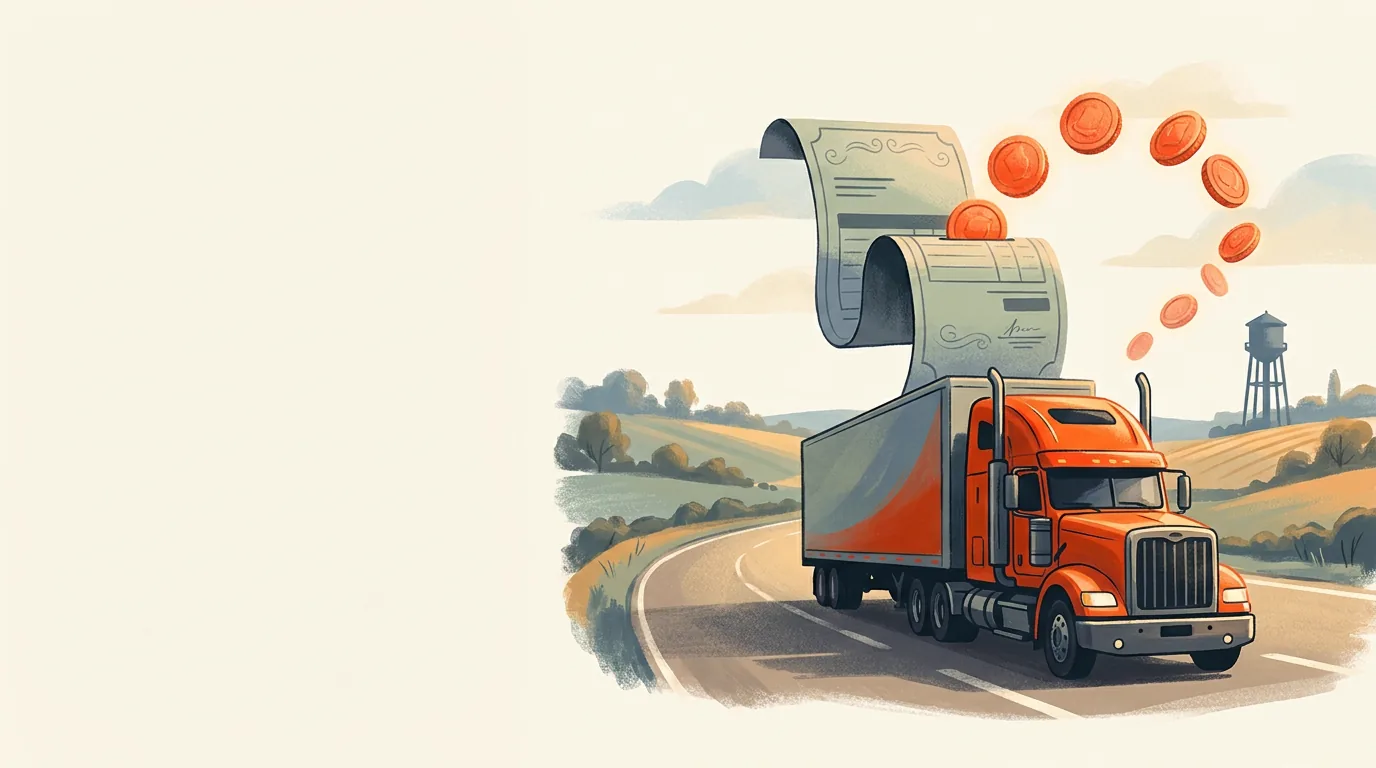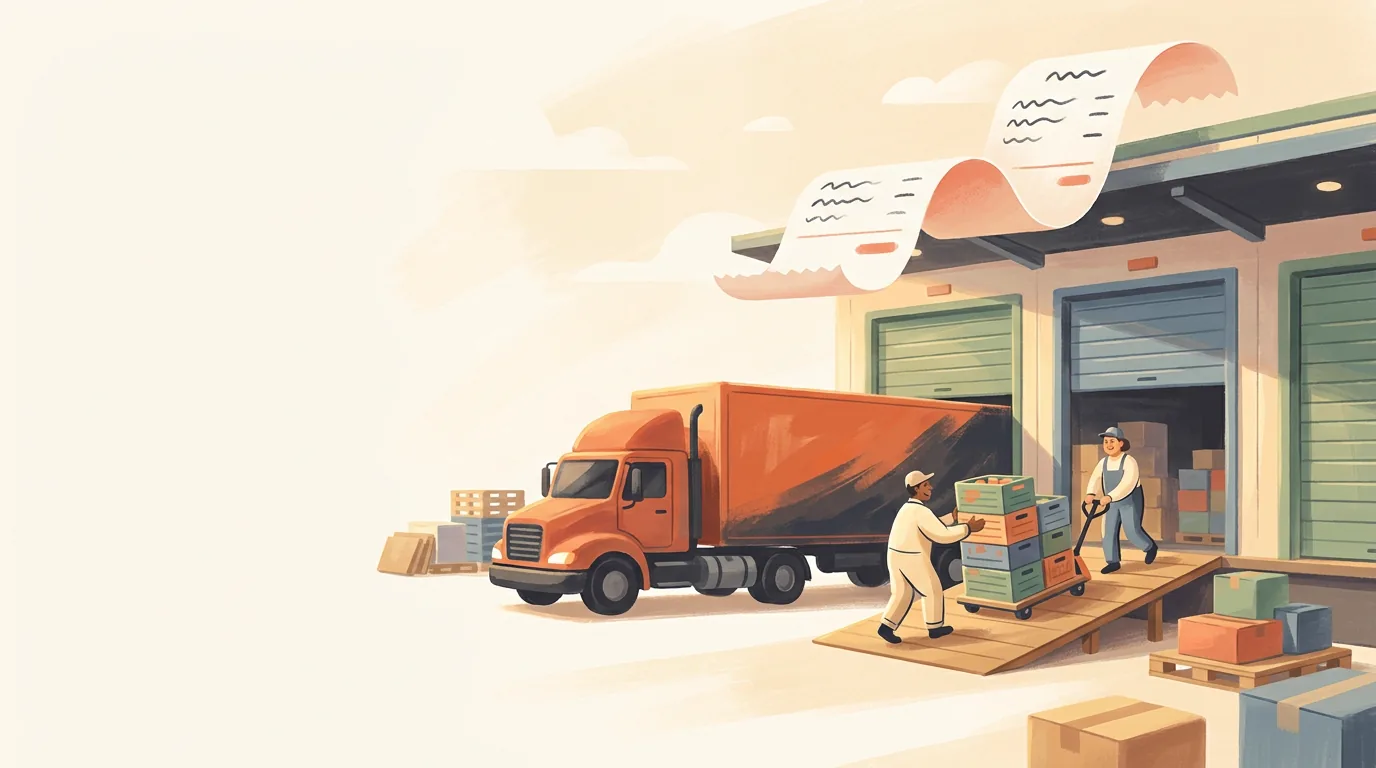
A lumper fee is the charge a warehouse or receiver applies for using third-party workers, lumpers, to unload your trailer. In practice the driver pays it at the dock, collects a receipt, and the broker or shipper reimburses it afterward.
That gap between paying and being reimbursed is the part that hurts. The fee comes out of your pocket today; the reimbursement arrives with the invoice, weeks later.
Here is who is actually responsible for the cost, what federal law says about it, and how to stop it from draining your cash.
What Is a Lumper Fee?
A lumper is a third-party laborer, not your driver and not the receiver's own employee, who unloads freight at a distribution center. Grocery and retail warehouses use them heavily, often through contracted unloading services.
The lumper fee is what that service charges for the job. It is separate from detention, separate from your linehaul rate, and it is almost always collected at the dock before the truck is released.
Two things make it distinct from other accessorials:
- It is paid on the spot, not billed later.
- It is usually paid by the driver, even though the driver is not the party who benefits from it.
Who Pays the Lumper Fee?
Commercially, the driver or carrier fronts the money and gets reimbursed by the broker or shipper.
Legally, the answer is different, and worth knowing before you argue with a dock manager.
Under 49 U.S.C. § 14103(a), when a shipper or receiver requires assistance with loading or unloading, they must either provide that assistance themselves or compensate the owner or operator for all costs associated with securing and compensating the people providing it.
In other words: the statute puts the cost on the shipper or receiver, not on you. The industry practice of a driver paying at the dock is a cash-flow arrangement, not a transfer of who owes the money.
What this means in practice: get the lumper fee acknowledged on the rate confirmation before you accept the load. A verbal "yeah, we'll cover it" from a dispatcher is not something you can invoice against.
Are Lumper Fees Legal?
Yes. A receiver is free to use a third-party unloading service, and charging for that service is legal.
What is not legal is coercion. 49 U.S.C. § 14103(b) makes it unlawful to coerce a carrier or driver into unloading the freight themselves, or into hiring workers to do it. The statute carves out activity protected under the National Labor Relations Act and the Norris-LaGuardia Act, but the core prohibition stands.
So the practical line is:
| Situation | Status |
|---|---|
| Receiver uses a contracted unloading service and charges for it | Legal |
| Carrier fronts the fee and invoices for reimbursement | Legal, and standard practice |
| Driver is pressured to unload the trailer personally | Prohibited under § 14103(b) |
| Driver is pressured to personally hire and pay unloaders | Prohibited under § 14103(b) |
If you believe you were coerced, the documentation you collected at the dock is the entire case. Which brings us to the receipt.
How Much Is a Lumper Fee?
There is no published rate, and no authority sets one. The amount varies with:
- Pallet count and case count. Most services price by volume handled.
- How the freight is loaded. Floor-loaded trailers cost more to break down than palletized ones.
- The specific warehouse and its contracted service. Rates are set per facility.
- Whether restacking or sorting is required on arrival.
Because the number is unpredictable, the risk is not the fee itself. It is accepting a load without knowing whether the fee is capped or reimbursable. Ask what the facility typically charges before you book, and get the reimbursement terms in writing.
Watch for rate confirmations that cap reimbursement at a fixed amount. If the dock charges more than the cap, the difference is yours to absorb.
How to Pay a Lumper Fee
Most facilities will not accept a personal card or a company check from a driver. The common methods are:
- Comchek or express code. The broker issues a one-time code that the driver presents at the dock. This is the cleanest option, because the broker pays directly and there is nothing to reimburse.
- Fuel card with a cash advance. The driver draws against the card and the fee is settled later.
- Cash. Still accepted at some facilities, and the easiest to lose track of.
Whenever it is an option, ask the broker for a Comchek before you arrive. It removes the reimbursement cycle entirely: no out-of-pocket outlay, no waiting, no disputed receipt.
Always Get a Lumper Receipt
The lumper receipt is the only proof you paid. Without it, the fee is not reimbursable and the load just got less profitable.
Your receipt should show:
- The facility name and address
- The date and time
- The amount paid and the payment method
- The load, BOL, or PO number
- The unloading service's name
Photograph it before you leave the dock and attach it to the paperwork you send with the invoice. A receipt sitting in a cab door pocket is a receipt that is not getting paid.
How to Avoid or Reduce Lumper Fees
You cannot eliminate lumpers on grocery and retail freight, because those receivers are built around them. You can control the exposure:
- Request a Comchek up front on any lane you know uses lumpers.
- Get the fee acknowledged on the rate con, with no cap or a cap you have verified against the facility's typical charge.
- Learn which facilities charge what. After a few runs into the same DC this becomes predictable, and predictable costs can be priced into your rate.
- Price it into the linehaul on lanes where reimbursement is unreliable.
- Deliver palletized where you have a choice. Floor-loaded freight is what makes an unloading bill expensive.
- Avoid brokers who consistently push the fee onto you. A broker who will not put reimbursement in writing is telling you something about how the rest of the settlement will go.
The Real Cost Is the Wait, Not the Fee
A reimbursed lumper fee costs you nothing on paper. On your bank balance it costs you everything for the weeks you are waiting.
That is the pattern behind most cash-flow trouble in a small fleet: fuel, tolls, lumpers, and repairs are all paid now, while the revenue that covers them arrives later. The load was profitable. The timing was not.
This is exactly the gap freight factoring closes: the invoice, including the reimbursed accessorials, converts to cash quickly instead of at the end of the payment cycle. The lumper fee still gets paid at the dock, but you are not the one financing it until settlement.
FAQs: Lumper Fees
What is a lumper fee in trucking? A lumper fee is the charge for third-party workers who unload a trailer at a warehouse or distribution center. The driver typically pays it at the dock and is reimbursed by the broker or shipper.
Who is supposed to pay the lumper fee? Under 49 U.S.C. § 14103(a), a shipper or receiver that requires unloading assistance must either provide it or compensate the carrier for the full cost. The driver paying at the dock is a cash-flow convention, not a change in who owes the money.
Are lumper fees legal? Yes. Charging for third-party unloading is legal. Coercing a driver into unloading personally, or into hiring and paying unloaders, is prohibited under 49 U.S.C. § 14103(b).
How much is a lumper fee? There is no set rate. It varies by pallet and case count, whether the freight is floor-loaded or palletized, and the individual facility's contracted service. Confirm the expected charge and the reimbursement terms before accepting the load.
How do I get reimbursed for a lumper fee? Get the fee acknowledged on the rate confirmation, keep the original lumper receipt, and submit it with your invoice. No receipt generally means no reimbursement.
What is the best way to pay a lumper? A Comchek or express code issued by the broker, because the broker pays the facility directly and you never go out of pocket.
Do lumper fees apply to every load? No. They are concentrated in grocery, retail, and food-service distribution centers. Most dry van, flatbed, and drop-and-hook freight involves no lumper at all.
Paying accessorials out of pocket and waiting on settlement? See how same-day factoring turns a delivered load into cash quickly, or read our guide to the Notice of Assignment (NOA) in trucking to understand how factoring paperwork actually works.